Opens in a new tab

Tattoo

Tattooing at Root Down Tattoo & Piercing

Welcome to Root Down Tattoo & Piercing – a Prague-based studio founded in 2024 on over 24 years of professional experience in piercing and extensive expertise in the world of tattooing. Our mission is to provide the highest standards of quality, safety, and hygiene while bringing your ideas to life with precision and care.

We believe in a personalised approach to every client. Our tattoo artists are experienced professionals who provide not only exceptional craftsmanship but also a comfortable and welcoming atmosphere. We value responsibility, attention to detail, and professionalism, ensuring that you leave our studio with not only an outstanding tattoo but also a positive experience.

Tattoo Artists at Root Down

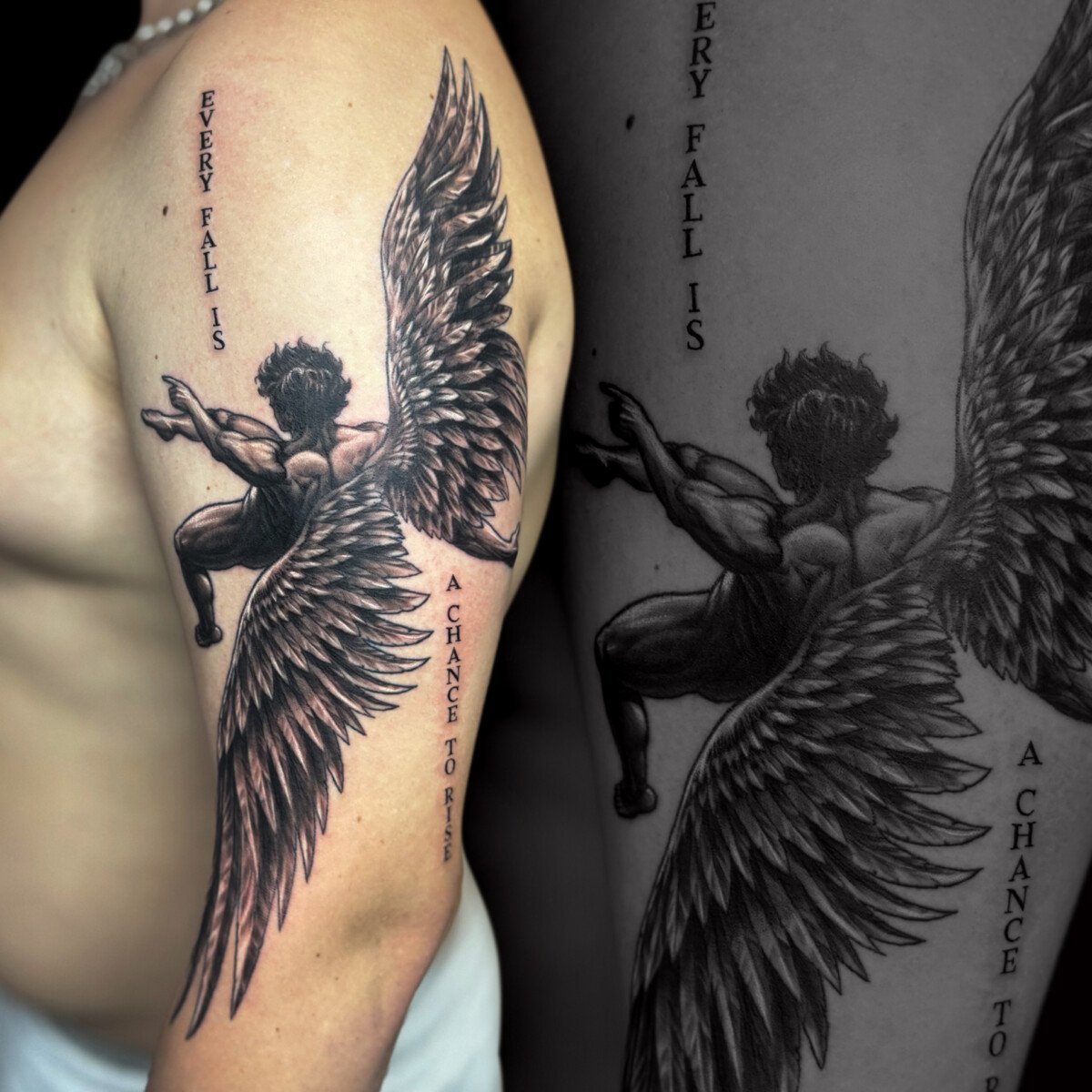
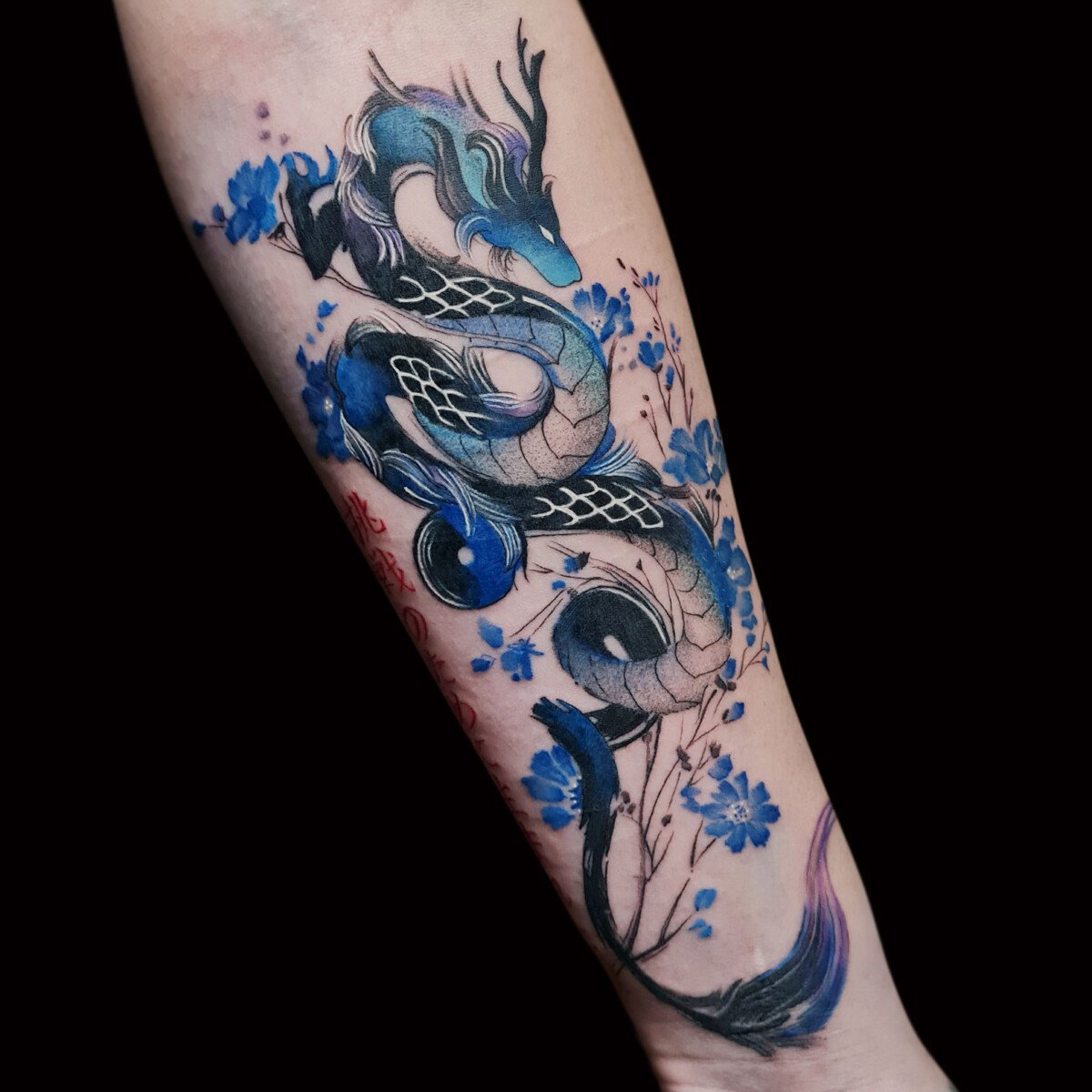
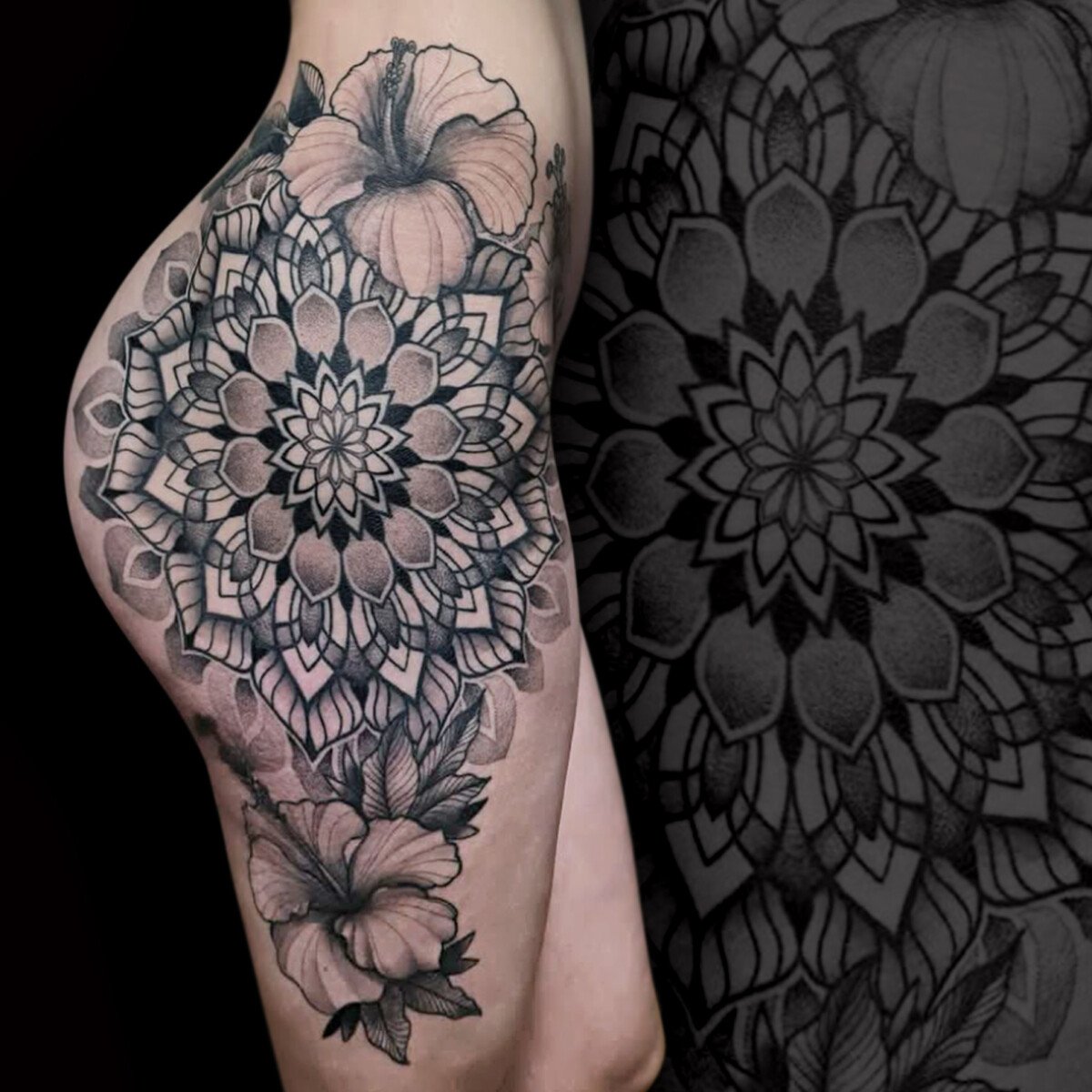
Our artists specialise in a wide variety of tattoo styles, from delicate fine-line designs to large-scale custom projects. Each artist approaches their work with precision and a deep respect for your ideas and vision.

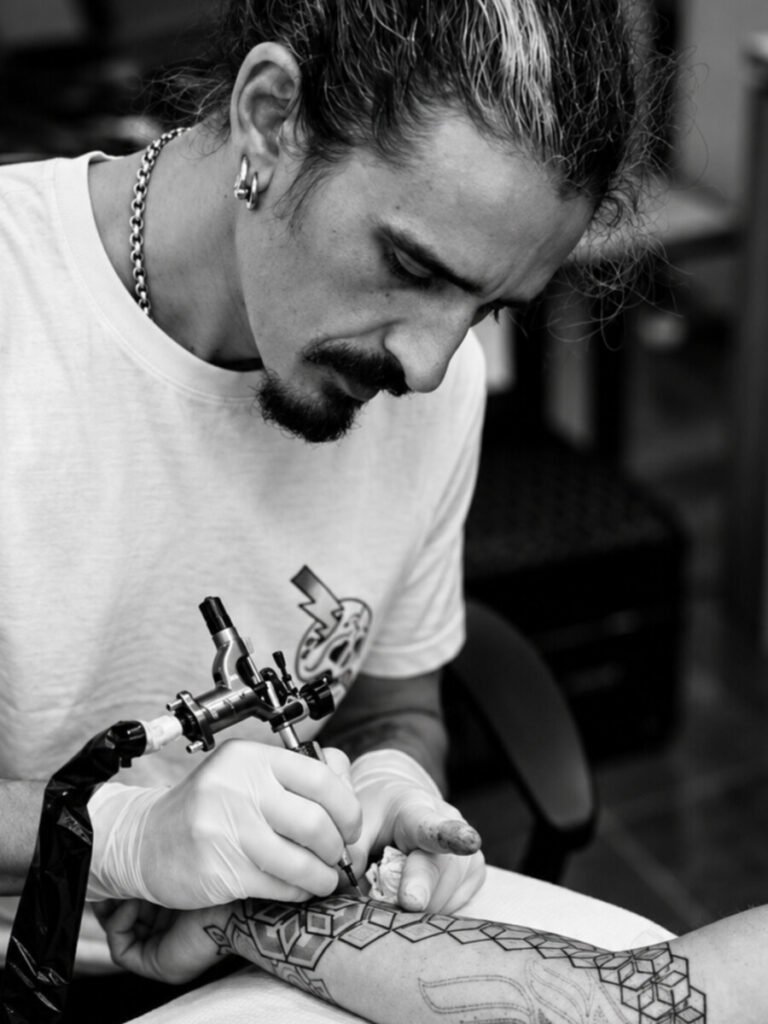
Kóca

tattoo

Tattoo Styles

Geometric Tattoos

Graphic Tattoos

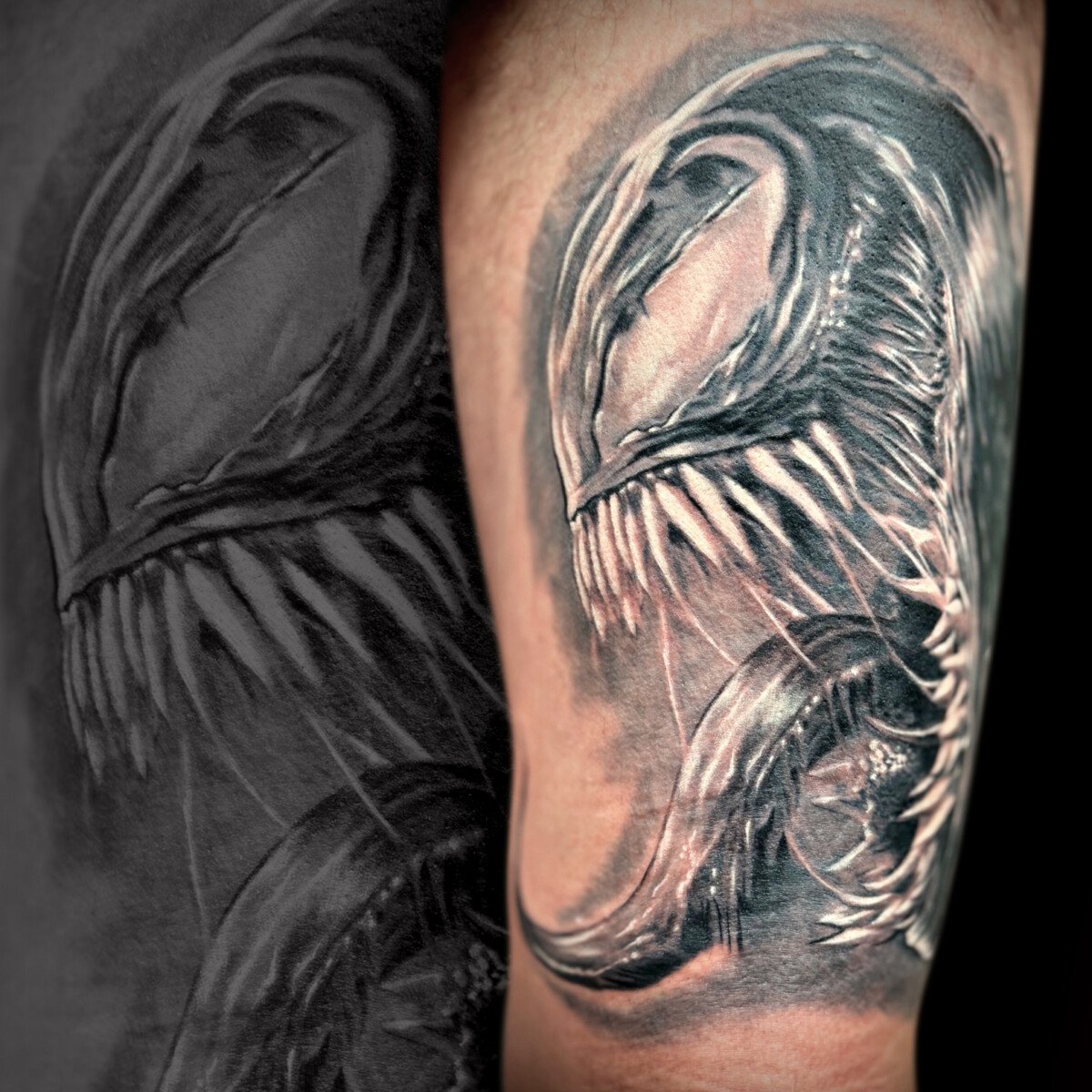
Comic & Manga Tattoos

Children's Drawing Replicas

Blackwork

Dotwork

Lettering

Fine Line

Kóca worked as a graphic designer for eight years, first in his hometown of Hronov in Eastern Bohemia and later, after moving to Prague, at the Agama advertising studio. The studio was led by painter Irena Macháčková.

After a chance meeting with his long-time friend Jarda Králíček, co-owner of the renowned Prague studio TRIBO, he decided to change direction and joined the Tribo team, where he was responsible for the e-commerce store and wholesale distribution of tattoo and piercing supplies.

In his spare time, he closely observed experienced tattoo artists at work, refined his technique, and in 2014 decided to pursue tattooing as a professional career. He spent most of his professional tattooing career at Tribo’s Prague 5 studio before relocating to the Prague 1 branch in 2023. He quickly grew fond of the location and decided to remain there after the opening of Root Down in 2024. Thanks to his outstanding professional skills and personal qualities, he has become an integral part of the continuing tattoo tradition on Klimentská Street.

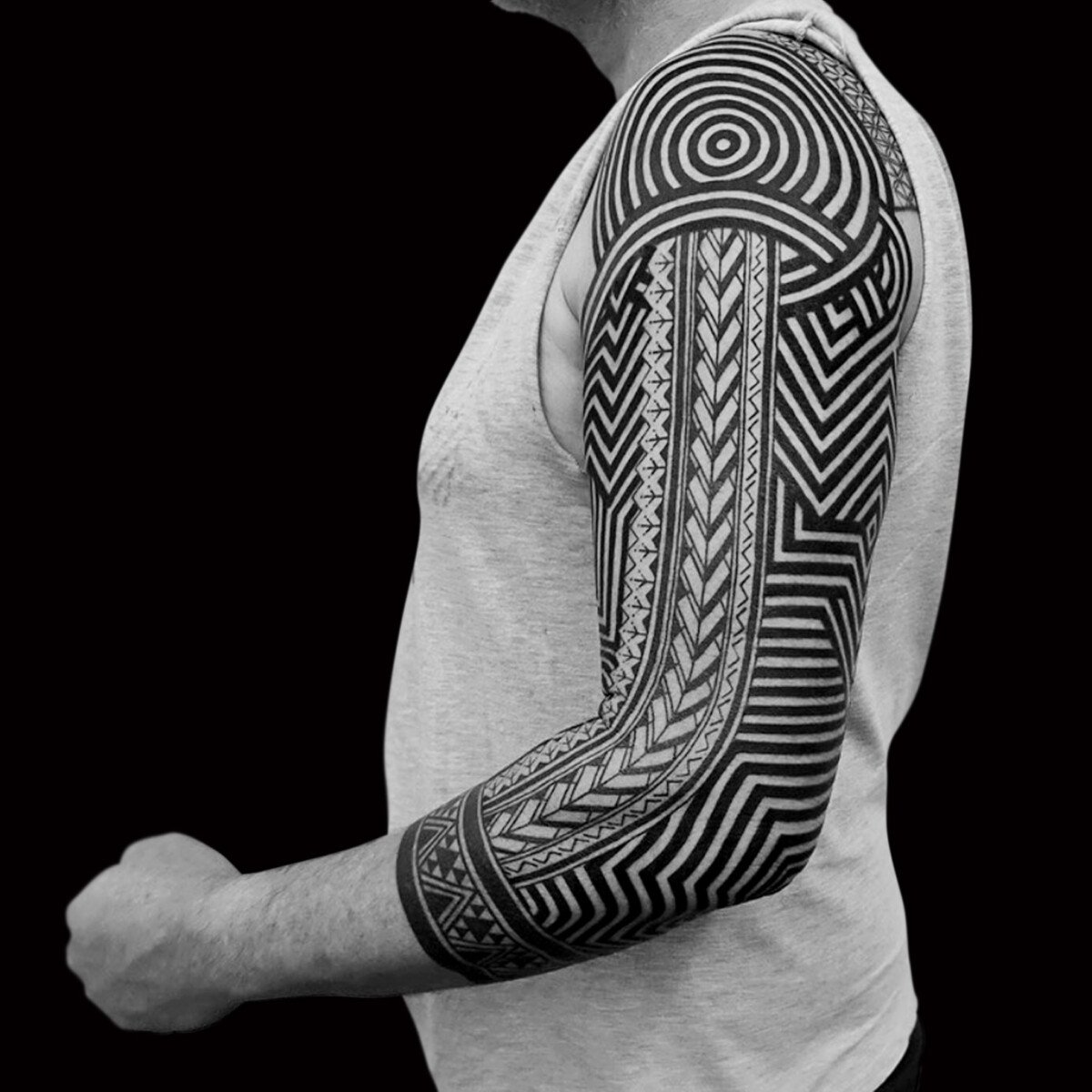
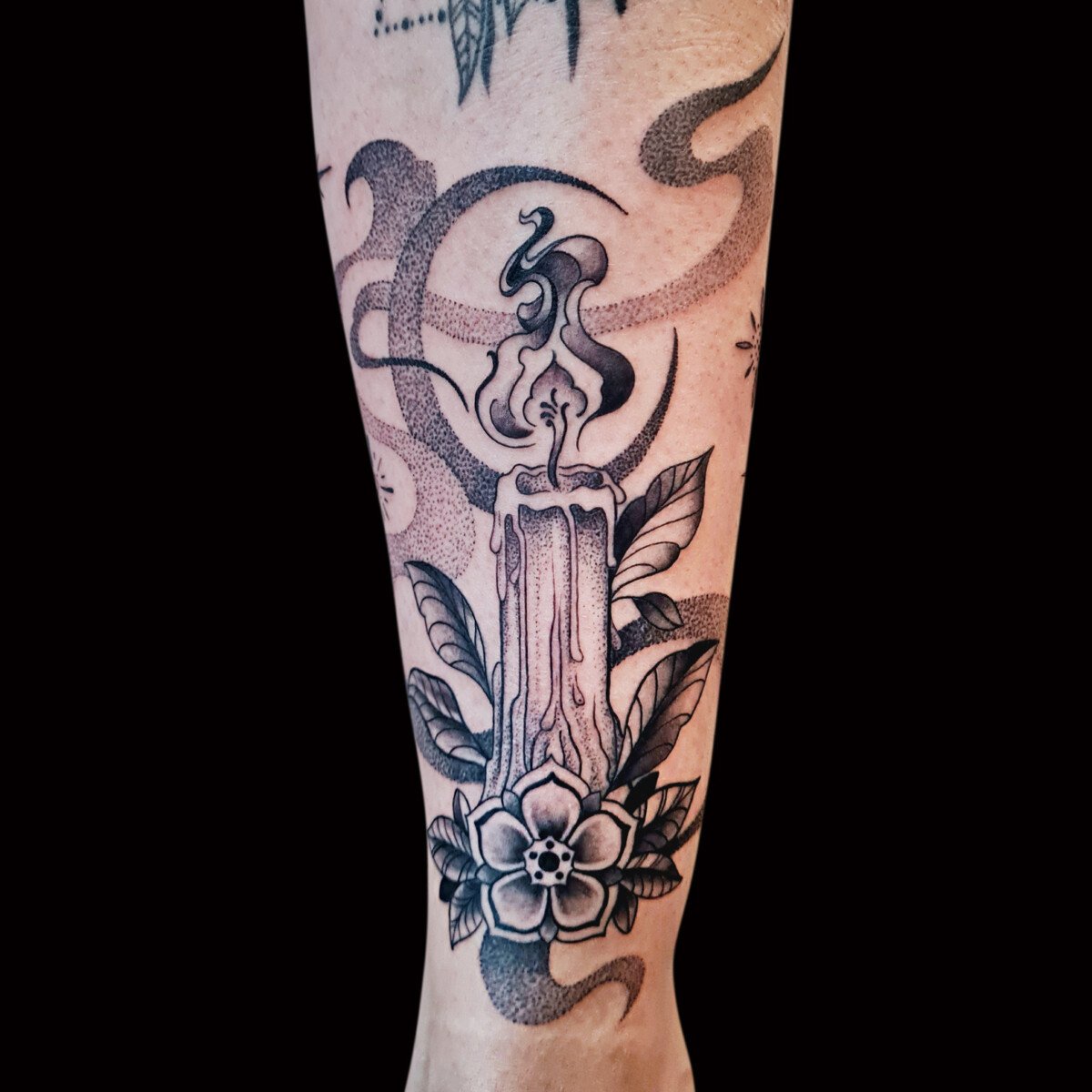
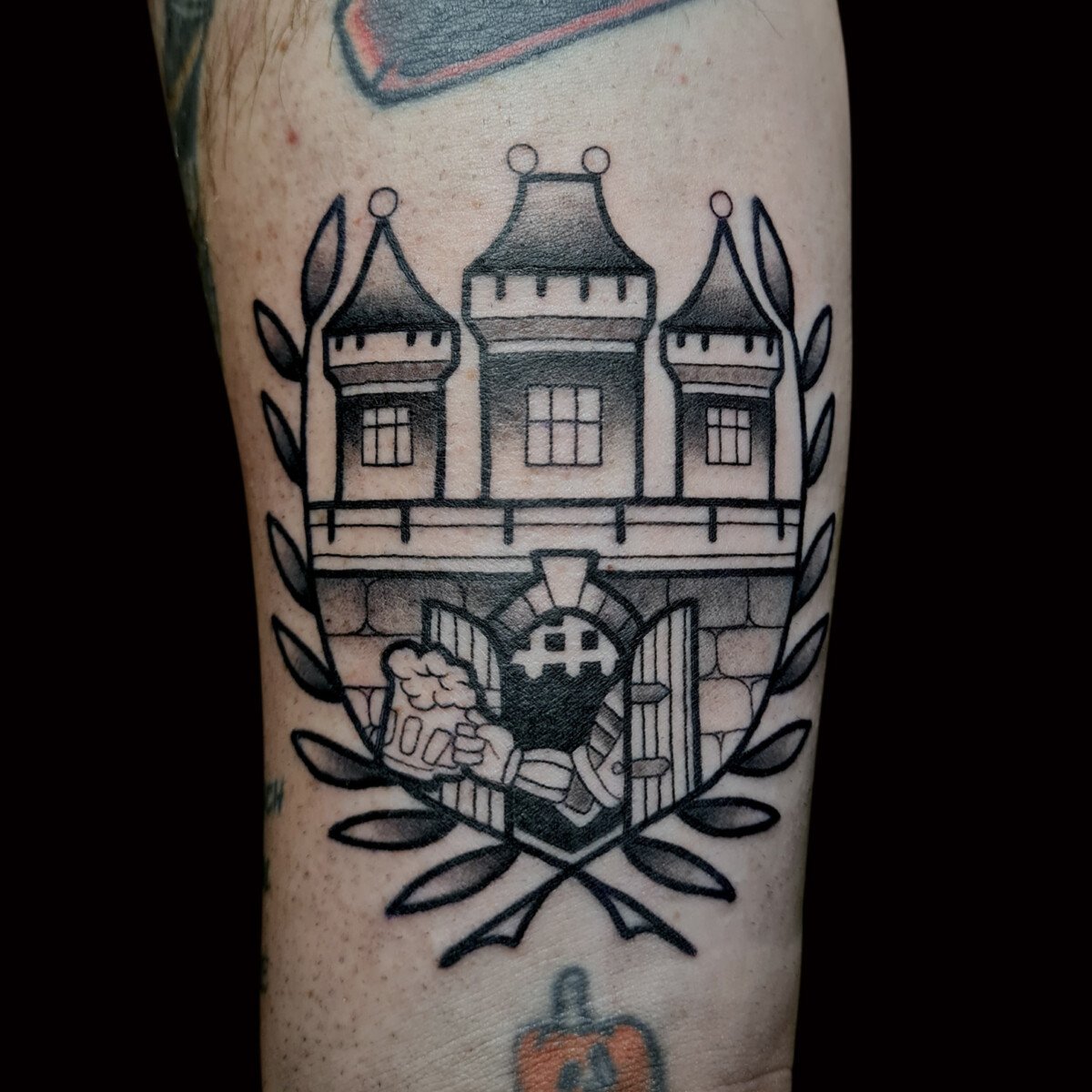
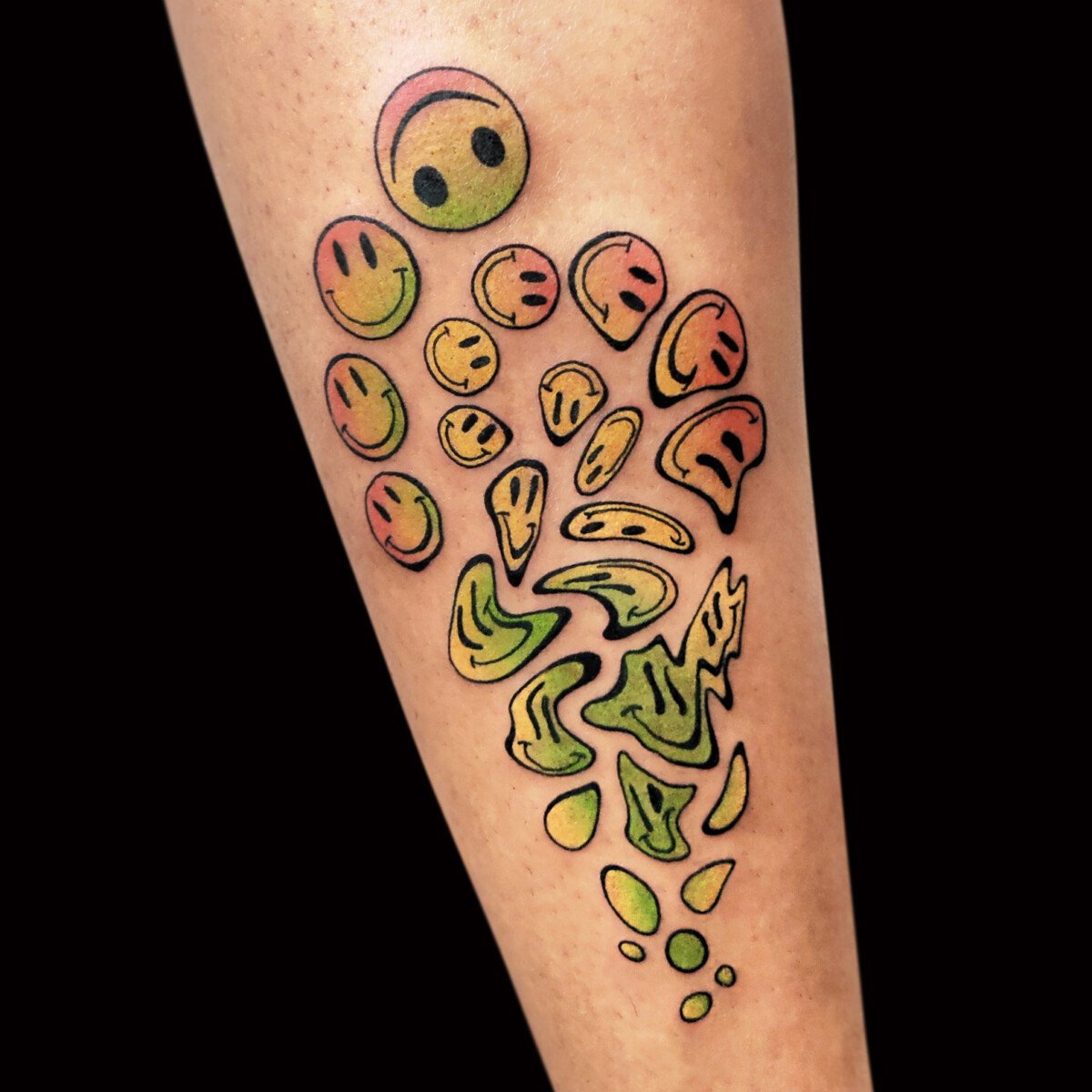
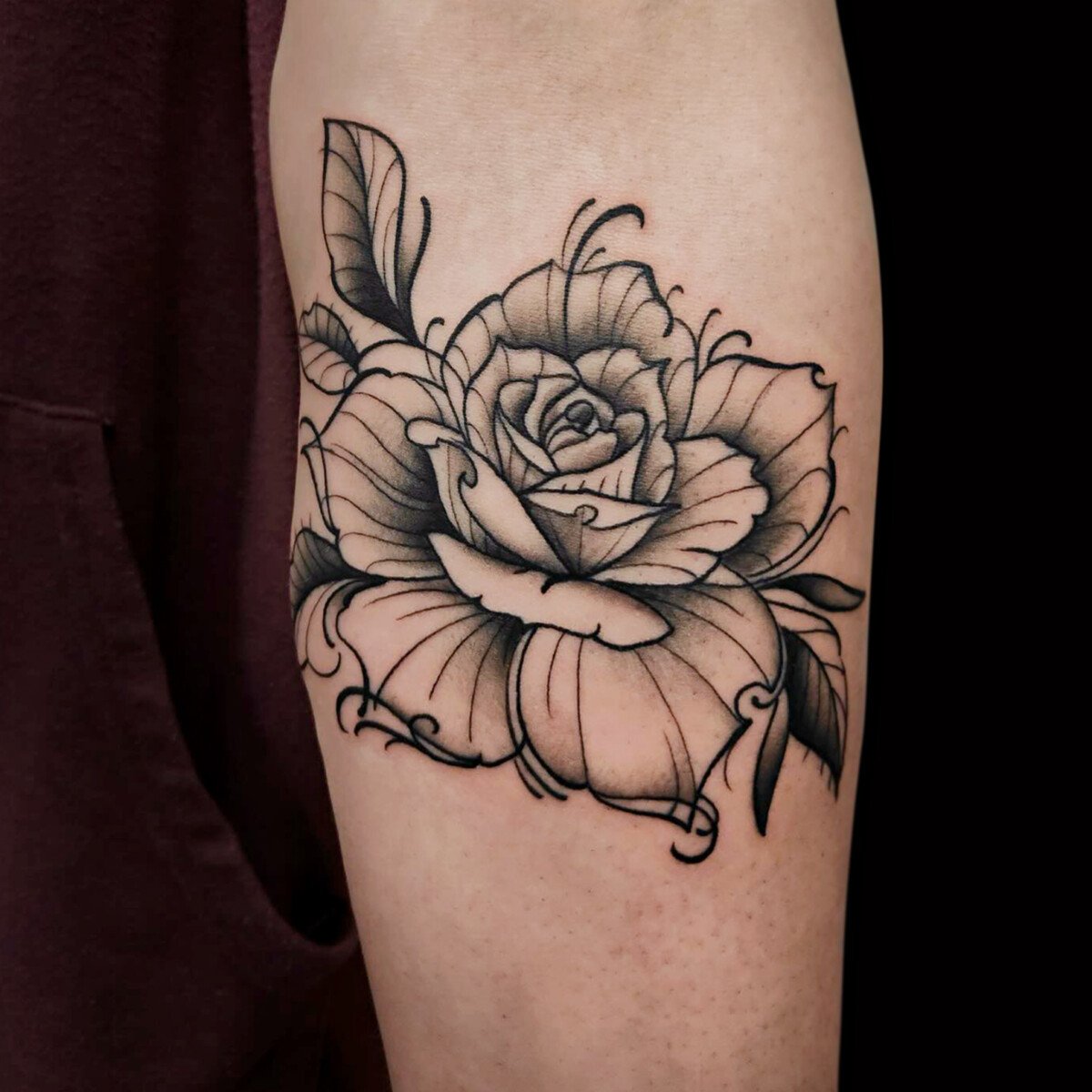
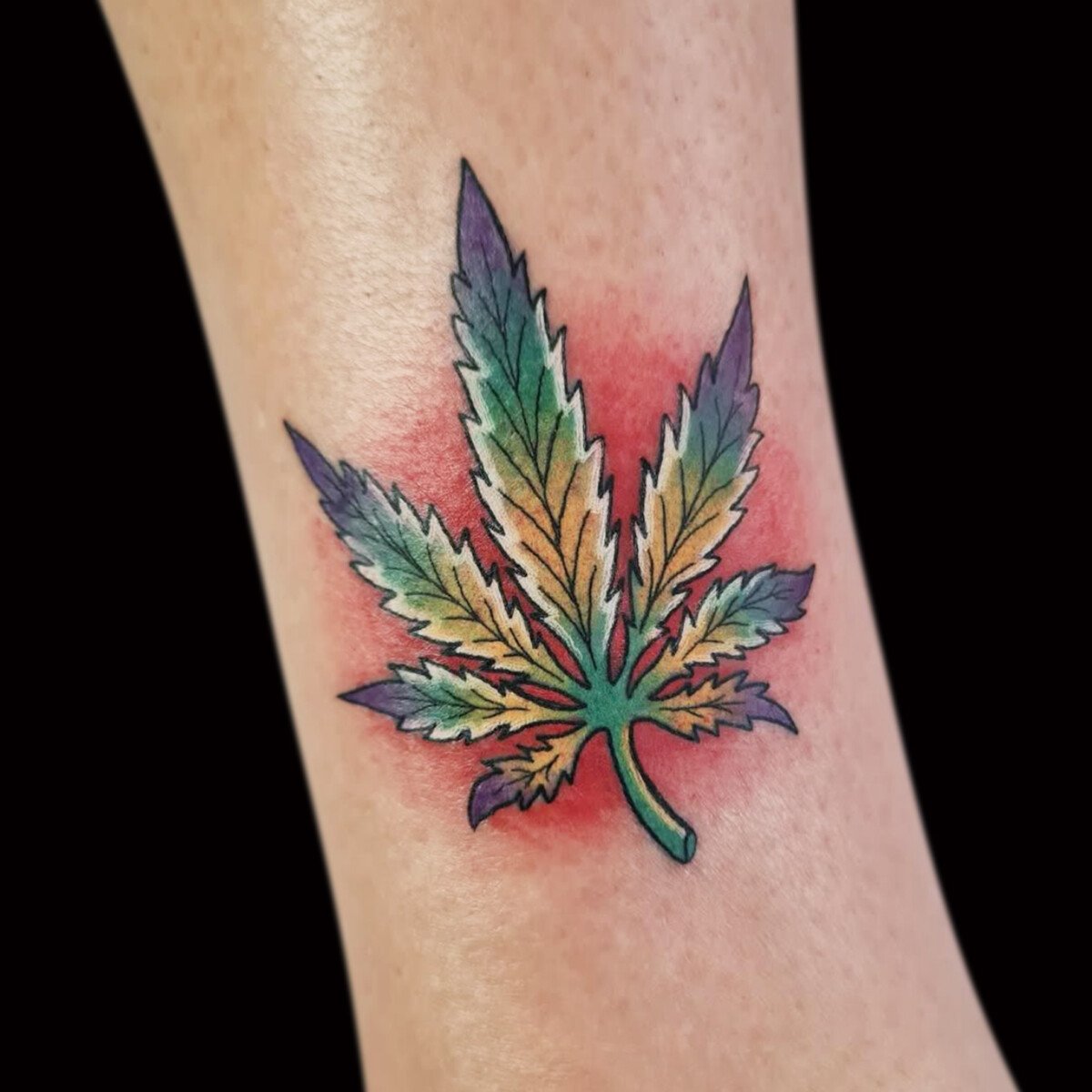
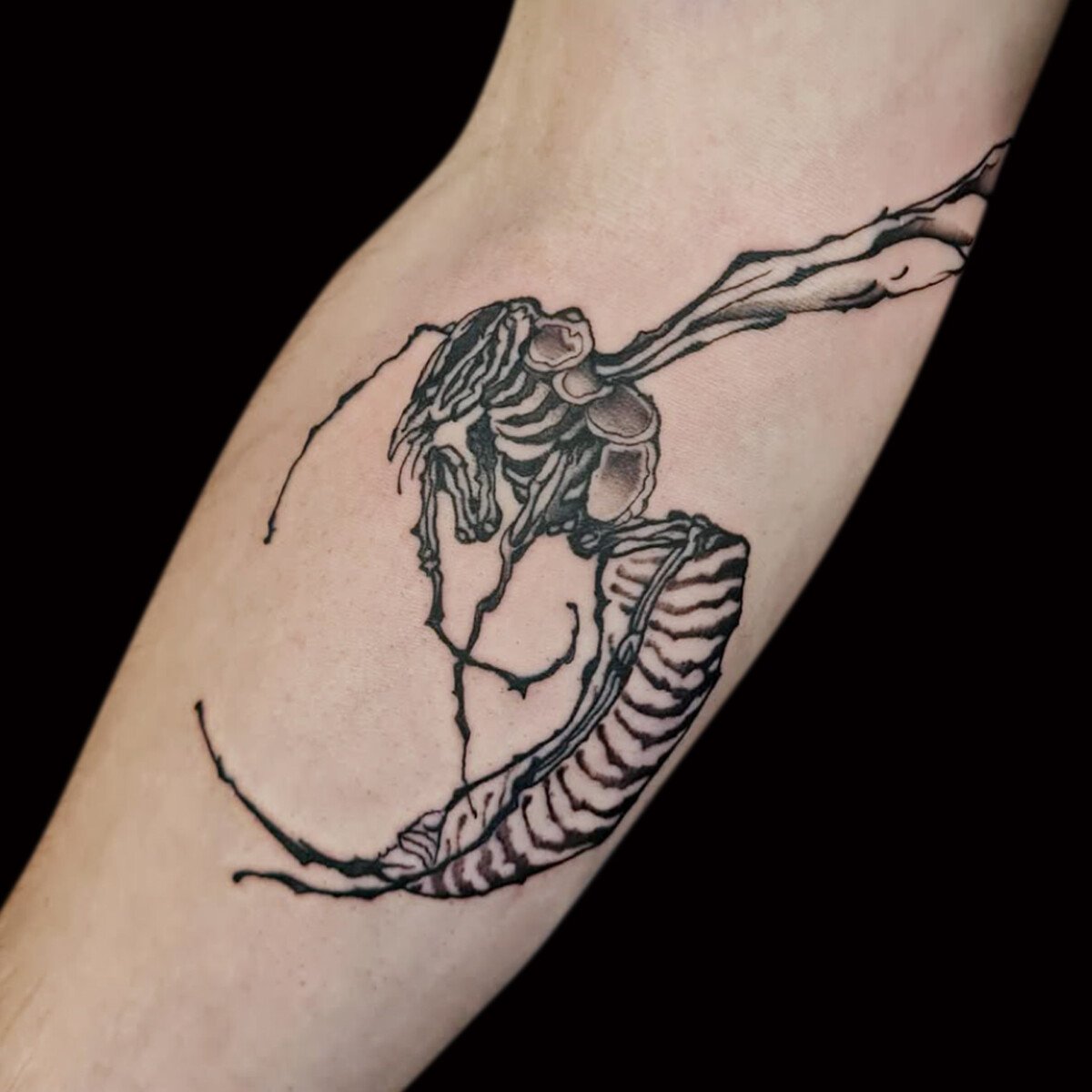
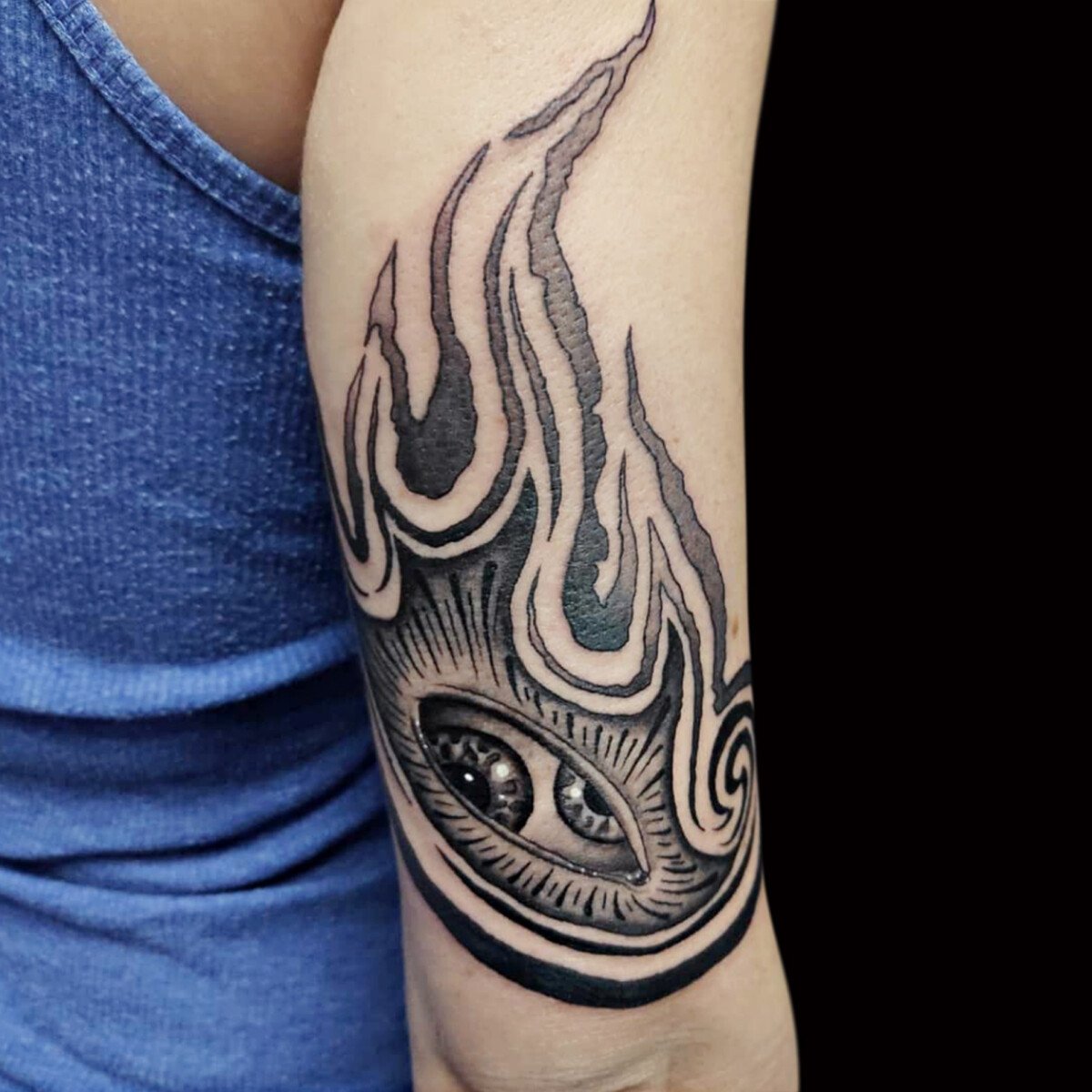
His portfolio features a wide variety of tattoo styles, ranging from graphic and geometric designs combined with dotwork or colour accents to blackwork, Japanese manga-inspired tattoos, lettering, and even reproductions of children’s drawings. He typically creates custom tattoo designs tailored to each client’s wishes and ideas, ensuring that every piece is truly unique. At the same time, his work is distinguished by a recognisable artistic signature and an exceptional eye for precision and detail.

Clients often return not only for the quality of his work but also for his warm and friendly approach, which makes the entire tattooing experience more relaxed and enjoyable.

Outside of tattooing, he is an avid collector of movie and comic book statues and figurines, a passion that is often reflected in his artistic work.

Honza

tattoo

Tattoo Styles

realism

color realism

black & grey

comic

trash polka

Tattoo Artist with Nearly 30 Years of Experience

Honza has been tattooing professionally since 1997. Over nearly three decades, he has worked at several well-known Prague tattoo studios, built his own private studio, and explored a wide range of styles. Today, he focuses primarily on both colour and black-and-grey realism, although he still considers himself an all-round tattoo artist.

From Drawing to Tattooing

He first got into tattooing while he was still in high school. When one of his classmates showed up at school with a tattoo, Honza, who had always loved drawing, immediately started thinking about how it could be reworked and what could be added to it. The idea stuck with him so strongly that he eventually just walked into a tattoo studio and asked the artist there if he would teach him how to tattoo.
He started out at No Name, a tattoo studio just below Charles Bridge, and his early days were typical of what learning the craft looked like in the 1990s. At first, it was all about cleaning, scrubbing grips and helping out around the studio in exchange for the chance to watch and learn from a more experienced tattoo artist. Over time, he learned how to solder his own needles and everything else that came with tattooing back then.
Make the English sound more naturalMake the tone warmer and more personal

Honza did his very first tattoo on his mentor. He offered him a spot on his calf between some older tattoos that would eventually be covered with a blackout anyway, and let Honza choose a simple design from a catalogue. He went with a heart and roses.

The result? Shaky, blown-out lines, a timid attempt at shading, and a bit of a disaster. In other words, exactly the kind of tattoo every beginner makes.

From the ’90s to Root Down

After No Name came Primal Arts on Nerudova Street, followed by Tribo, Aries and then Bloody Blue Tattoo, where Honza spent around ten years. Later, he opened his own private studio just outside Prague, which he still runs today. Over time, however, he began to miss working as part of a team, so he joined Alien Tattoo. After roughly two and a half years there, he is now making the move to Root Down.

Realism, Light, Shadow and Depth

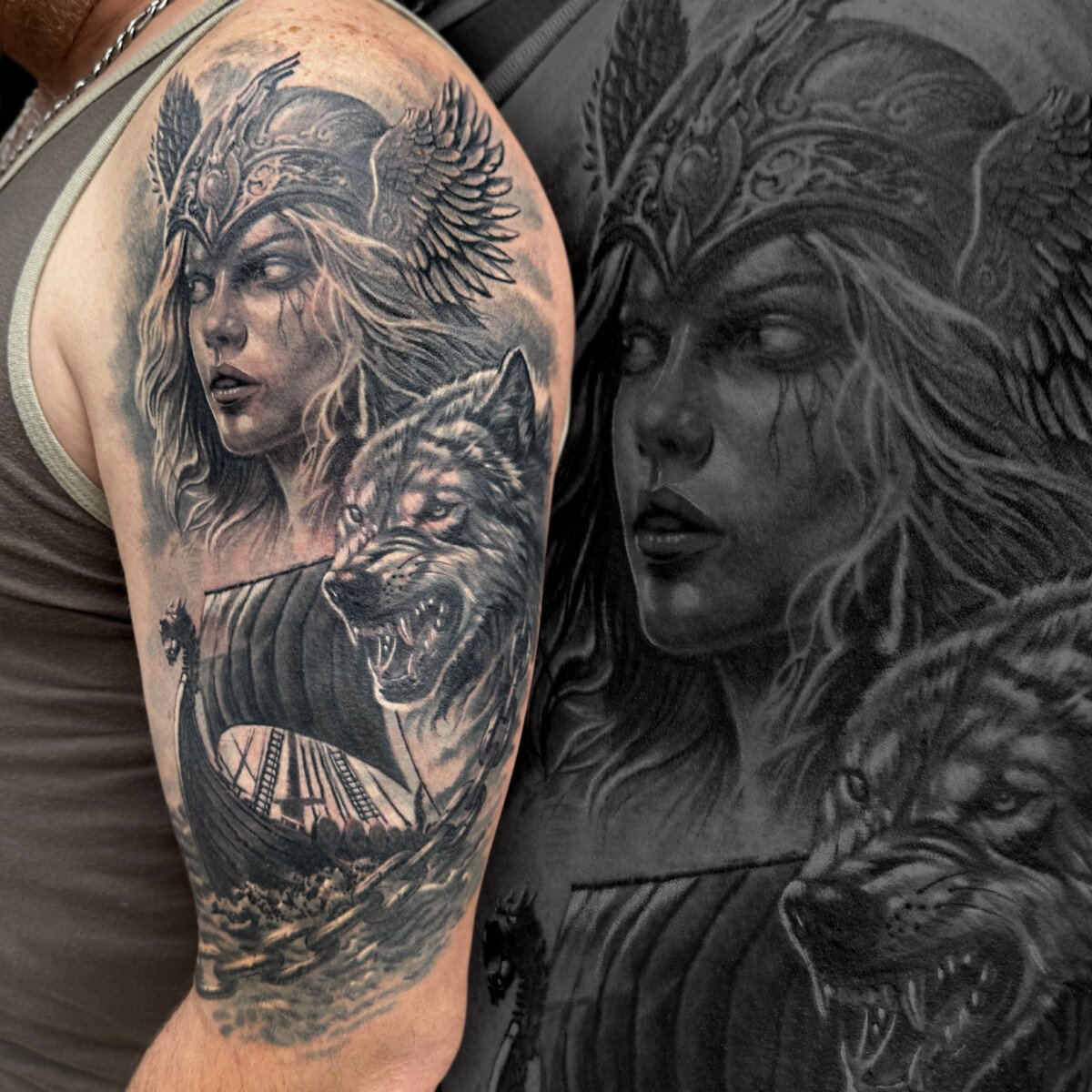
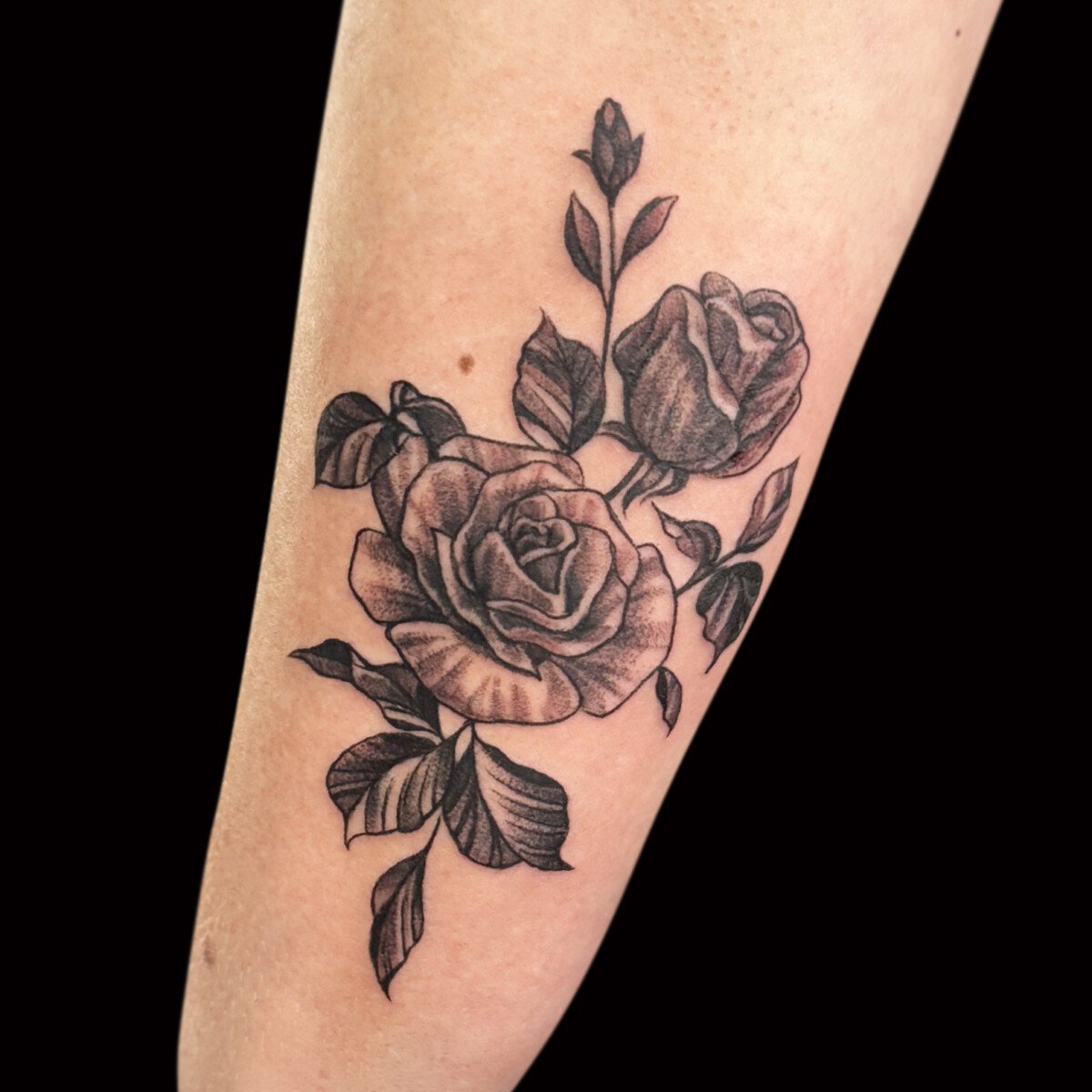
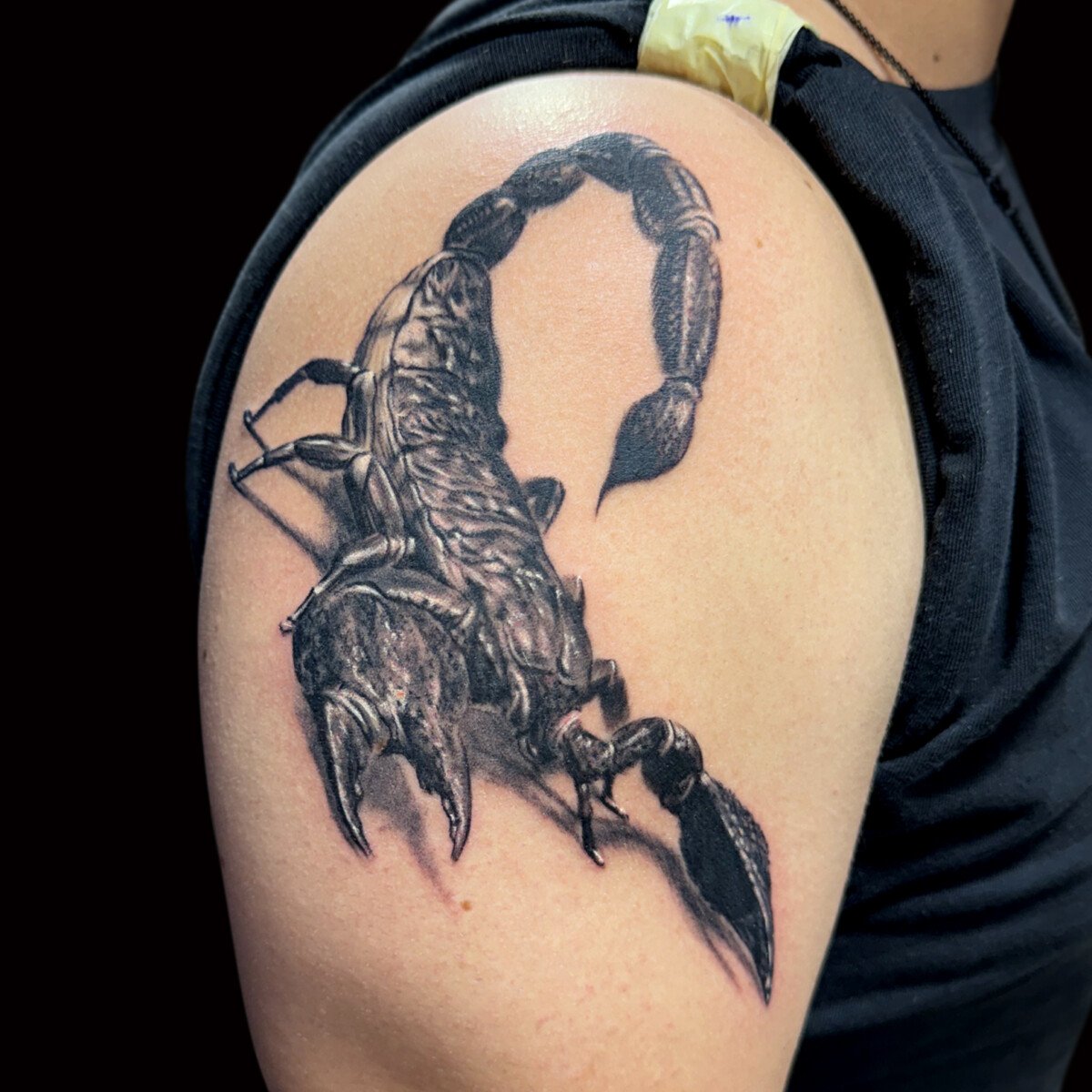
Today, Honza focuses primarily on colour and black-and-grey realism. He enjoys working with light and shadow, perspective and textures, everything that can give a design depth and a three-dimensional feel.

He also enjoys traditional, comic and new school styles, as well as trash polka, where he can combine realistic elements with abstraction. He often draws inspiration from Norse mythology, Viking sagas and darker or Gothic themes, but for him, a strong concept is more important than any particular style.

A Tattoo Has to Work on the Body

Honza takes the client’s idea as a starting point and develops it into a design that works first and foremost as a tattoo. Contrast, light and shadow, colour, readability and the size of the design all play an important role.

Placement is just as important. A tattoo is not an image on paper. It has to respect the proportions and natural lines of the body and, where necessary, work with existing tattoos. Honza therefore prepares the foundation of the design in advance and uses freehand mainly directly on the body, where he can fine-tune the composition to fit the specific placement.

Honza always tries to accommodate his clients’ ideas, but he is not afraid to speak up when his experience tells him something simply will not work. After all, a tattoo should not only look good when it is fresh and photographed. It needs to work on the body and age well with the person who will wear it for the rest of their life.

Honest Work, No Autopilot

Hygiene and cleanliness are a given for Honza. Communication, focus and honest work are just as important. Even after nearly thirty years, he never wants to tattoo on autopilot just because he has done something a thousand times before.

During each session, he tries to create a relaxed and friendly atmosphere where clients feel comfortable expressing their opinions. After all, they are the ones who will be wearing the tattoo, so it is important to truly understand their vision and use his experience to turn it into a design that works on the body.

Kosta

tattoo

Tattoo Styles

geometric

ornamental

neotribal

Blackwork

abstract

Professional since 2012

Kosta has been tattooing professionally since 2012. He focuses primarily on geometric, ornamental, and neo-tribal styles, though he also has a fondness for blackwork, abstract, and old school. Geometric design, however, is the style he returns to most often. He enjoys combining individual elements, working with composition, and adapting designs to specific body types.

His Beginnings in Prague

He began tattooing around 2010 in Prague. At the time, he was living with several tattoo artists, some of whom had over twenty years of experience. He gained his first experience directly from them. He started by practicing on an orange using replicas of Mickey Sharpz machines and a borrowed liner; he then did his first tattoo on a person at a friend’s home in the kitchen. This was followed by tattooing models for nominal fees or for free, and a season at a walk-in studio by the sea. There, he worked night shifts and mainly did lettering and simpler designs. The large volume of work helped him gain confidence and improve his technical skills.

Since 2012, Kosta has worked at several studios in Prague. He started at Bloody Blue Tattoo, and later worked at No Name Tattoo and Kinky Tattoo as well. He is now part of Root Down. He doesn’t really seek out conventions or competitions. What matters much more to him is the work itself and the result – a satisfied customer.

Geometry, Composition, and the Body

Kosta draws inspiration from nature, architecture, and art galleries. A design may be created based on a specific brief, in collaboration with the client, or entirely freely. He also works freehand and combines a prepared stencil with a drawing done directly on the body. Anatomy is a fundamental part of his design process. Every person has different proportions, so the same motif won’t look the same on different bodies. He therefore adapts the composition, size, and level of detail to the specific person and location.

According to Kosta, a good tattoo must look good even when viewed from several meters away. The basic composition should be clearly legible, and the details should complement it, not overwhelm it. Proper contrast, the size of individual elements, and their overall balance are important. That’s one reason he doesn’t do micro-realism. He doesn’t believe that extremely fine details will hold up in the skin over the long term the way they’re supposed to. When evaluating his own work, he’s interested not only in the fresh tattoo but, above all, in how it looks once it’s healed.

Freedom and Trust

He prefers to work freely and with the client’s trust. At the same time, he respects the fact that the client will be wearing the tattoo, and the final design must also match the client’s vision. He takes an individualized approach with each client. With some, he talks during the session; with others, he listens to music and works in silence. He observes how the person is handling the tattoo, takes breaks as needed, and doesn’t like to rush his work. He considers hygiene, patience, and concentration to be essential.

In his personal life

Outside the studio, he rides an XC bike, works with wood, spends time in nature, and listens to music. The project he’s currently looking forward to is a large, colorful geometric design covering his entire body.

Mazan

tattoo

Tattoo Styles

old school

traditional

black & grey

From Piercings to Tattoos

Jirka Žemlík, also known as Mazan, originally started out as a piercer. He did his first piercings on friends as a teenager and later began working as a professional piercer at the Tsunami studio. At the same time, however, he was increasingly drawn to tattooing, which he had first experimented with around the age of sixteen. He gradually transitioned fully into tattooing and has been working professionally in the field since the late 2000s. His close friend, famous tattoo artist Bára Fousková, played an important role in his early days and his subsequent development.

Translated with DeepL.com (free version)
Ten Years in Cyprus and a Return to Prague

Mazan spent a large part of his professional life abroad. He gained his first international experience in South America around the age of nineteen, while still working as a piercer. Later, he lived in Cyprus for about ten years. After returning to the Czech Republic, he joined Inkoust in Prague. This was followed by Brotherhood, the first studio he co-owned, and later Crew. In addition to his work in Prague, he continues to travel regularly and guest tattoo at studios abroad. For example, he has tattooed in Germany, Norway, and Canada, and he also has a long-standing collaboration with the German studio Inklabs. Working in various countries has allowed him to learn about different approaches to tattooing and how studios operate. Thus, traveling has had a lasting influence not only on his life but also on his own work and perspective on tattooing.

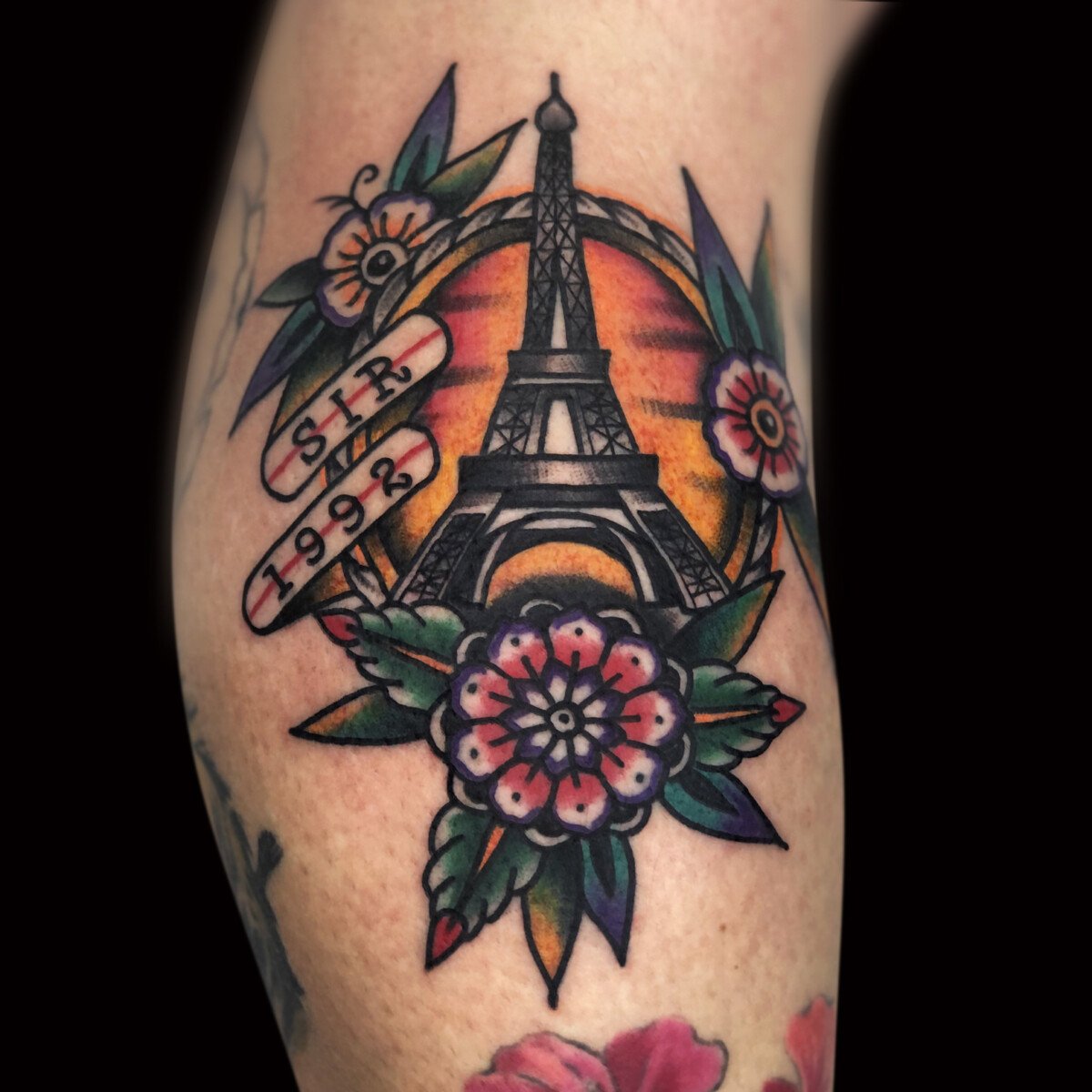
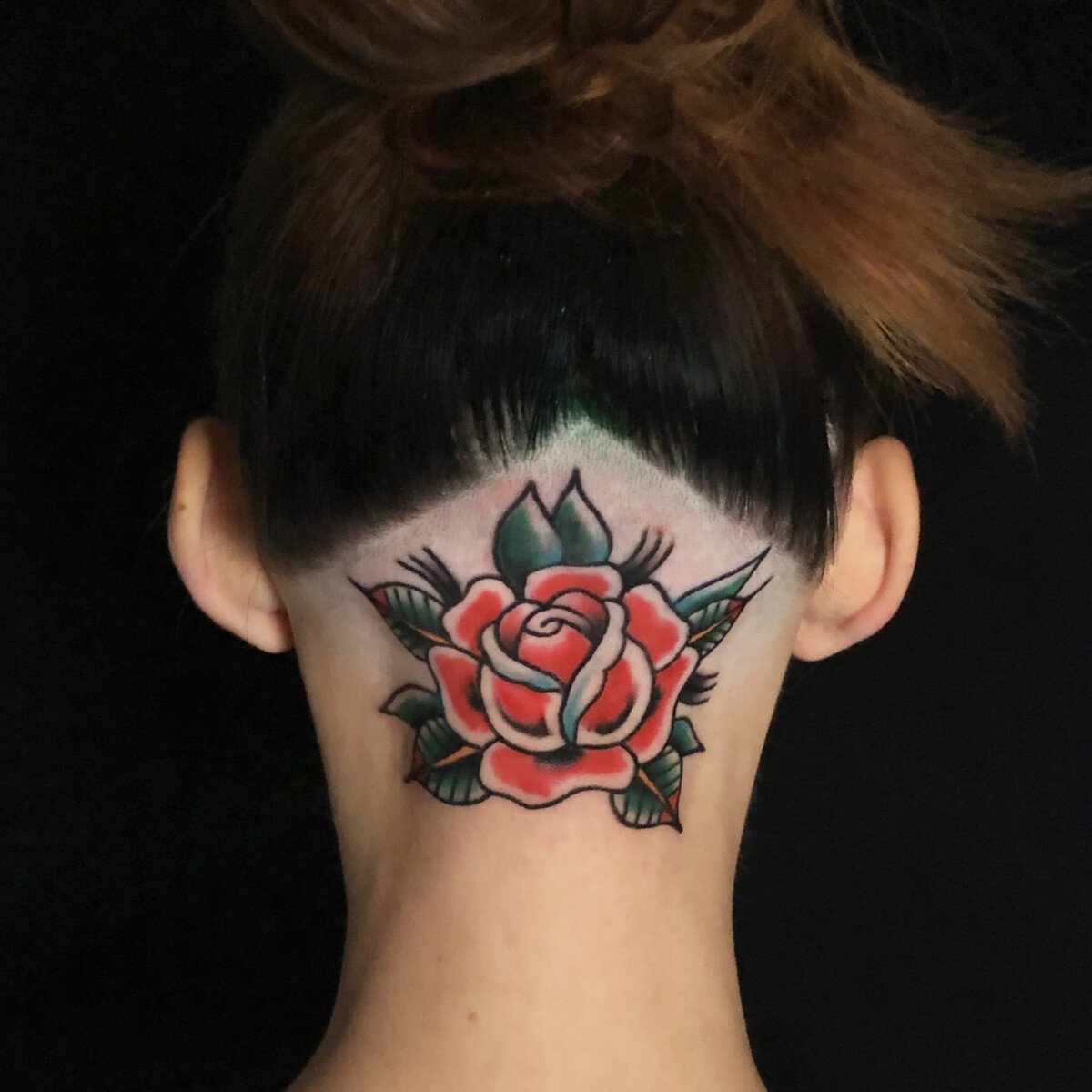
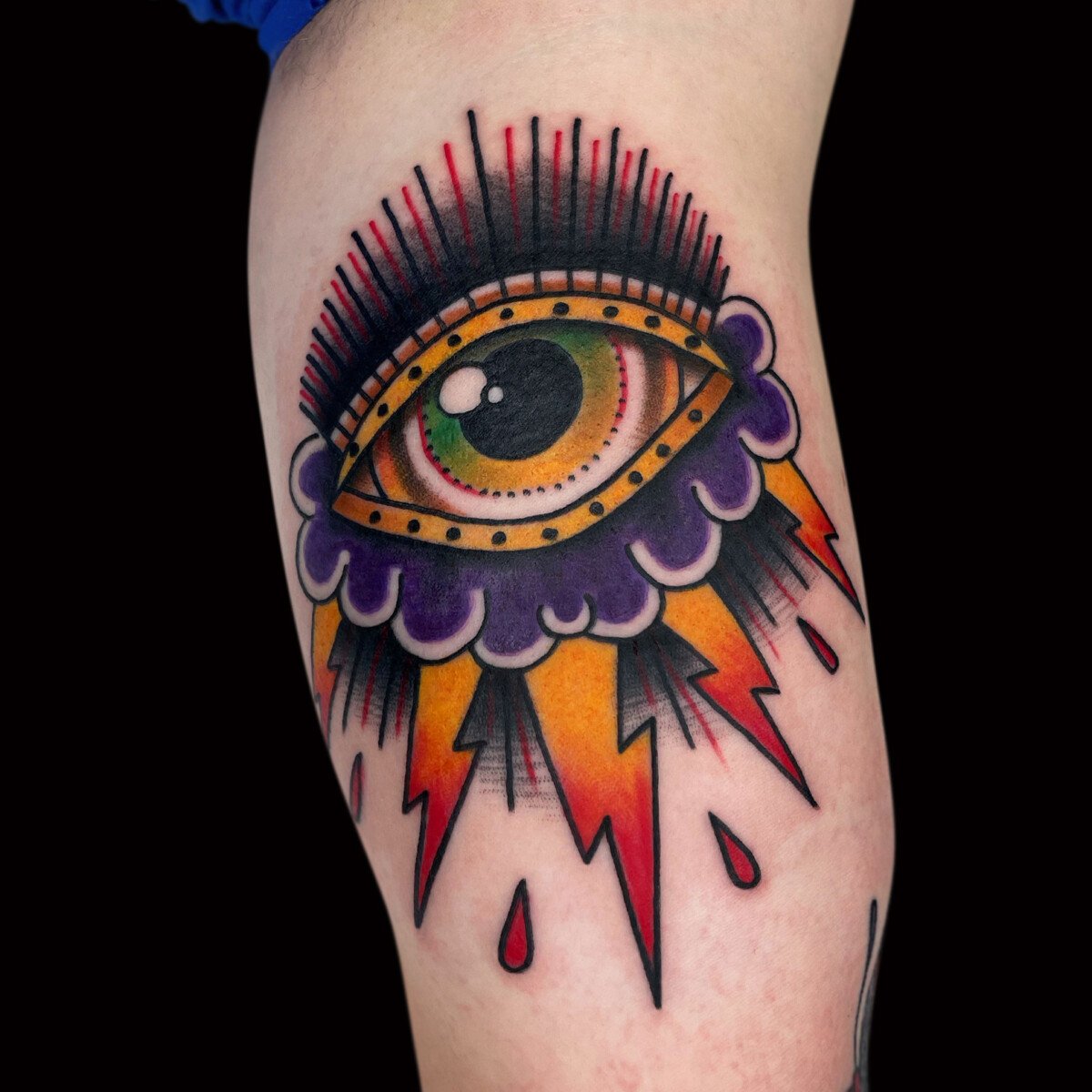
Traditional, his way

The foundation of Mazan’s work is the traditional style, to which he has developed his own distinctive style over the years. Unlike the classical approach, he works with a more varied color palette and his own unique combinations. He often uses purple; in the past, turquoise and red also featured prominently in his work. Certain details in his drawings are also characteristic of his style, such as the way he renders leaves. Thistles are a favorite motif of his. He enjoys their shape and the fact that they don’t appear in tattoos as often as classic roses. He is drawn to ships, the sea, and nautical motifs, which naturally stem from the years he spent traveling and living by the coast.

The Basic Idea and Creative Freedom

Above all, Mazan needs the customer to provide a basic idea and the elements they want included in the tattoo. After that, he prefers to have enough freedom to compose the design in his own way. When designing, the flow of the tattoo with the body is essential to him. The composition must respect the anatomy, fit properly in the chosen spot, and work as a whole. A good image on paper doesn’t automatically mean a good tattoo.

Traditional on a Big Scale

One of the projects Mazan would love to tackle with complete creative freedom is a full “traditional sleeve.” Unlike classic patchwork, the individual motifs would be connected by ornate frames, and the composition would cover almost the entire arm. Ideally, it would feature a travel theme, ships, and other motifs close to his heart. Even after all these years, what he enjoys most about tattooing is the creative process itself and connecting with people. For him, the best result is simple: a client whose eyes light up with joy once the tattoo is finished.

Bary

tattoo

Tattoo Styles

traditional

neo-traditional

oldschool

west coast

black & grey

Bary comes from the picturesque Bulgarian coastal city of Burgas. He first visited Prague in 1997, and although he travelled extensively, Prague captured his heart the most. He has lived here permanently since 2009.

Drawing fascinated him from an early age, which led him to attend an art school. He began tattooing at the age of thirteen, first practising on himself. Over time, tattooing became his passion, alongside his musical career as a member of a band. At the age of twenty-four, Bary decided to dedicate himself to tattooing professionally, and in 2004 he became an apprentice to the renowned tattoo artist Tarlito – a defining moment in his career. His talent and tireless dedication soon enabled him to open his own studio, Love Thy Neighbor, in his hometown of Burgas. After several successful years, he decided to take his work beyond Bulgaria and explore the wider world.

Unfortunately, fate and family circumstances have led Bary to move back to his hometown of Burgas. From now on, he will continue working with Root Down exclusively as a guest artist.

We’ll always announce his guest spot dates well in advance, both on our Instagram and directly to everyone on his guest list.

If you’d like to be notified about his next visit, simply send your name and phone number to info@rootdown.cz, and we’ll make sure you hear about upcoming dates as soon as they’re announced.

His favourite tattoo styles include Traditional and Neo-Traditional, West Coast, Black & Grey, and Realism. He draws inspiration from street culture, the sea, religion, and above all from animals—especially his beloved dogs. Every design he creates is unique, combining the client’s vision with Bary’s own artistic perspective.

Bary has worked in prestigious tattoo studios across Europe, including Germany, Austria, the Netherlands, and the Czech Republic. Throughout his career, he has met many talented tattoo artists who inspired him, but his greatest role model and mentor remains Tarlito.

In his free time, Bary enjoys swimming, which helps him maintain balance and recharge from the intensity of his work. Most of all, however, he values spending time with his family—his beloved wife, two children, and three dogs—who bring him joy, inspiration, and renewed energy.

Frequently Asked Questions About Tattooing